
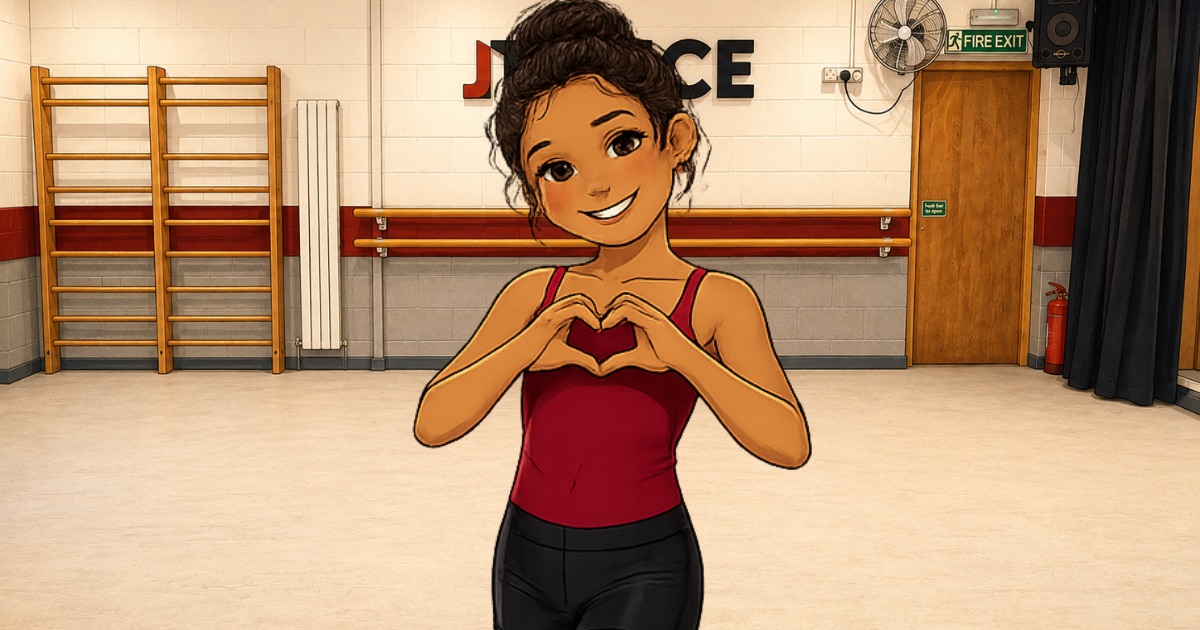
Courage and Kindness means having a go while helping other people feel safe enough to do the same. Both qualities work inward and outward: we can find courage, give courage, show kindness to others and speak kindly to ourselves.
In brief
- Courage is measured by the attempt, not by whether everything goes right.
- Kindness creates the safety that allows dancers to try, make mistakes and improve.
- Students, teachers and parents can give courage and kindness to others and to themselves.
Courage looks different every day
In dance, courage may look like performing in front of an audience, but it is just as often much quieter. It can be joining a new group, asking for help, accepting a correction or trying a step again after getting it wrong. For one student, courage is standing at the front. For another, it is simply entering the studio.
We measure courage by the trying, not the outcome. A wobble does not cancel the bravery it took to attempt the balance. Nerves do not mean someone lacks confidence. Often, courage is choosing to take part while the nerves are still there.
Kindness makes courage possible
People take healthy risks when they trust the room around them. Kindness might be encouraging a classmate, celebrating somebody else’s success, including the newest person or waiting patiently while someone works something out. It tells dancers that mistakes will be treated as part of learning, not as entertainment for everyone else.
Sometimes kindness gives another person the courage they need. At other times, somebody’s brave attempt encourages the whole group to be more generous and supportive. The 2 qualities strengthen each other, which is why their place together matters.
Directed inward and outward
Courage and Kindness both point in 2 directions. You can be brave yourself and help a friend be brave. You can be kind to the people around you and kind to yourself. That last part matters because dancers can speak to themselves more harshly than any teacher would.
Being kind to yourself does not mean pretending a mistake did not happen. It means responding usefully: noticing it, listening to the correction and trying again without turning one difficult moment into a judgement about who you are.
Correction should build confidence, not spend it.
At JL
The conversation continues after class
Adults help decide whether courage and kindness travel beyond the studio. The way teachers give feedback matters. So does the way parents and carers talk about a performance, exam or result on the way home.
We can acknowledge disappointment honestly while still noticing the courage it took to participate. We can celebrate success without comparing one child with another. Both responses keep the focus on effort, progress and the person behind the result.
The JL teaching team
A safe place to keep trying
High standards and kindness are not opposites. Students improve when expectations are clear and they feel safe enough to make the mistakes that improvement requires.
Courage gets a dancer into the attempt. Kindness helps them, and everyone around them, come back ready to try again.
Like what you're reading?
Just answer 3 quick questions and we'll help you find the right class.
Enquiry sent
Thank you for your enquiry.
Please check your inbox for more information from JL Dance Academy.
If you do not see it, check your spam folder and mark us as a trusted sender.
Was this helpful?
Share or like this article
Loading genuine likes…